Thiruvananthapuram, Aug 4 : Kerala has taken the first formal step towards establishing an independent AYUSH University, a move expected to give a major boost to education, research and innovation in the country’s traditional systems of medicine.
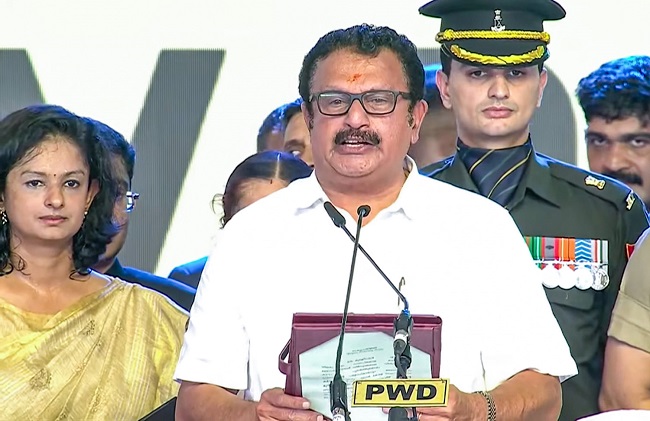
Health and Devaswom Minister K. Muraleedharan on Tuesday announced the constitution of a four‑member committee to draft legislation for the proposed university. The panel has been asked to submit the draft Kerala AYUSH University Bill within two months.
The proposed university will bring under one umbrella all AYUSH educational institutions in the state currently affiliated to the Kerala University of Health Sciences (KUHS).
It is envisaged as a specialised institution to coordinate academic programmes, clinical training, research, drug development and policy initiatives in Ayurveda, Homoeopathy, Siddha, Unani and other recognised AYUSH streams.
Calling it a historic step in strengthening Kerala’s traditional healthcare systems, the minister said the university would create an integrated academic ecosystem capable of meeting international standards in teaching and research.
The university is proposed to be headquartered at the School of Fundamental Research in Ayurveda at Tripunithura.
Besides framing the legislation, the committee will examine governance structure, academic framework, research priorities and administrative systems before submitting its recommendations.
The committee will be chaired by the Principal Secretary, AYUSH Department, with the State Mission Director of the National AYUSH Mission serving as convener.
The Director of Ayurvedic Medical Education and the Principal and Controlling Officer of the Government Homoeopathic Medical College are the other members.
The university is expected to strengthen interdisciplinary research, improve the quality of AYUSH education and expand opportunities for clinical studies and pharmaceutical innovation.
With Kerala already regarded as a leading centre for Ayurveda, the proposed university is expected to enhance the state’s position as a national hub for traditional medicine while giving greater global visibility to India’s indigenous healthcare systems.
The initiative also aligns with the Centre’s growing emphasis on expanding the AYUSH sector through specialised education, research and evidence‑based clinical practice.