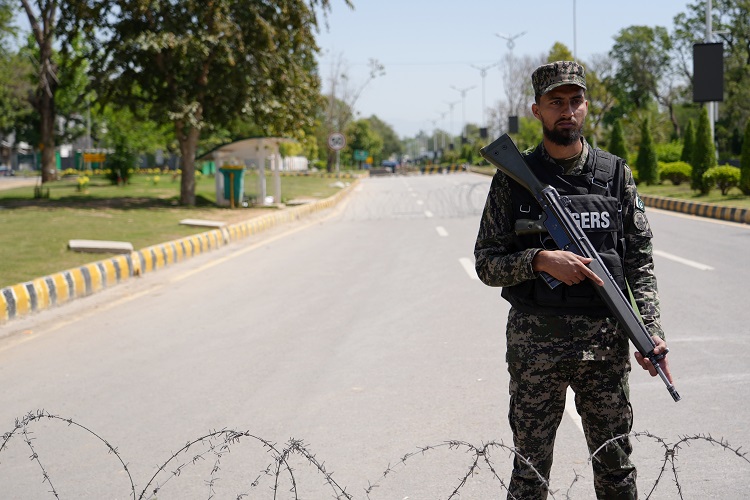
ISLAMABAD: Pakistan's response to a bread-and-butter protest movement in Pakistan-occupied Kashmir (PoK) with live fire, mass arrests, a communications blackout, and the blocking of an international media outlet reporting on the unrest was not merely an attempt to quell dissent. It was an effort to ensure the rest of the world never saw how that dissent was being suppressed. The true measure of the international community's commitment to press freedom will be whether it allows Islamabad's effort to succeed, a report has stated.
According to a 'One Word Outlook' report, PoK has, for the past two months, remained under a virtual siege that has received little attention in Western headlines, with Pakistani Rangers firing on unarmed protesters and prolonged internet and mobile shutdowns in the region for weeks at a stretch.
“A grassroots rights coalition has been formally designated a terrorist organisation. And in the first days of August, Islamabad extended its campaign of information control to an audience well beyond its own borders, restricting access to Al Jazeera English after the network aired ground reporting from Muzaffarabad. Pakistan’s Information and Broadcasting Ministry did not deny the coverage was accurate; it simply accused the network of ‘selective reporting’ and ‘yellow journalism,’ and the site went dark for millions of Pakistani users,” the report detailed.
“This is not a story about a distant territorial dispute. It is a story about what happens when a state facing a genuine, home-grown uprising over bread-and-butter grievances chooses bullets, blackouts and blacklists over dialogue — and about how easily that playbook extends to silencing the outside world’s view of it,” it added.
The report noted that while the shootings and disappearances in PoK were the most brutal tools in Islamabad's toolkit, the blocking of Al Jazeera on August 2 was the clearest indication of its intent.
“The network had spent the preceding days airing detailed reports on the election-related unrest and the security crackdown in Muzaffarabad. Within roughly 24 hours, users across Pakistan began reporting that the site had gone dark. Pakistan’s government has, notably, never formally confirmed ordering the block — a pattern of official deniability that has become its own signature of this crackdown, alongside the blackout itself,” it mentioned.
According to the report, Pakistan's Information and Broadcasting Ministry, in a social media post, accused Al Jazeera of misrepresenting the vote through hand-picked polling stations and scripted interviews, signalling its displeasure with the network's coverage.
Slamming the Pakistani authorities, it said, “That framing matters. A government confident that its account of events could survive scrutiny would invite independent observers in and let the footage speak for itself. Instead, Islamabad reached for the oldest trick in the authoritarian playbook: when you cannot dispute the facts, discredit the messenger.”
--IANS