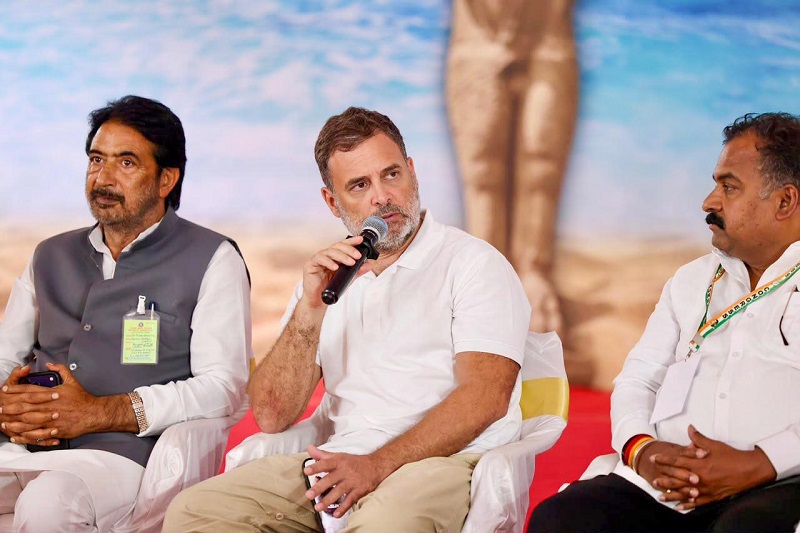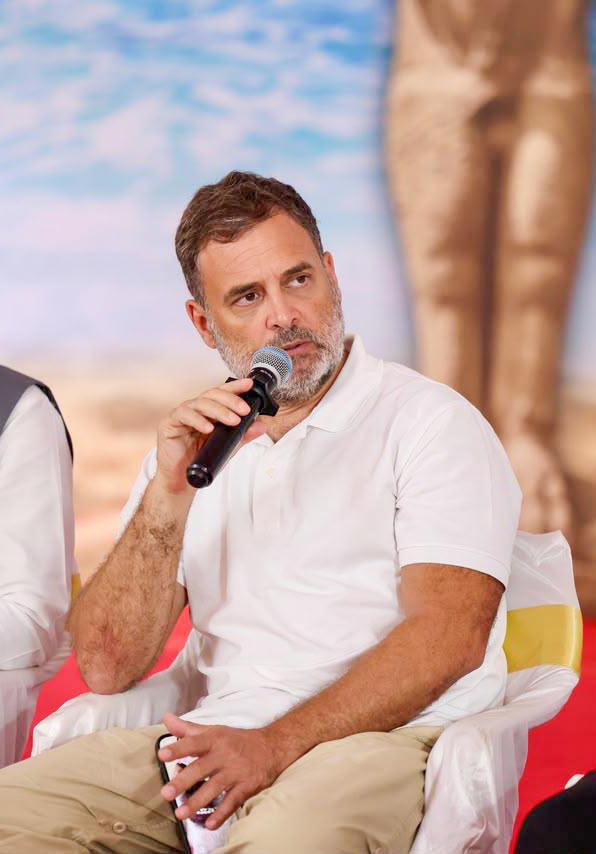
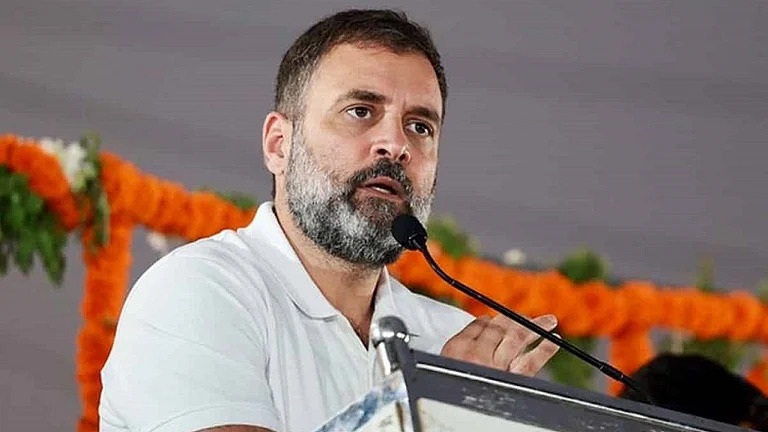
Congress leader Rahul Gandhi on Wednesday launched a sharp attack on the Centre over its decision to temporarily restrict access to Telegram ahead of the NEET-UG 2026 re-examination, likening the move to "locking the victim's house instead of catching the thief".
The government on Tuesday ordered a temporary restriction on the messaging platform until 22 June, arguing that the measure was necessary to curb misinformation and prevent cheating networks from exploiting the app during the 21 June re-test. The move comes amid heightened scrutiny following the cancellation of the original NEET-UG examination over allegations of paper leaks and malpractice.
Taking to X, Rahul Gandhi questioned the logic behind blocking a platform used by millions of students for academic purposes.
"'Telegram Ban' — Modi government's new trick to stop paper leaks. Meaning, instead of catching the thief, just put a lock on the victim's door," Rahul Gandhi wrote.
He argued that lakhs of students have long relied on Telegram for notes, test series, discussions and exam preparation, and asked how depriving them of that resource could be considered a solution to examination fraud.
"Lakhs of students have been studying on Telegram for years. How does snatching that facility become the solution to paper leaks?" he asked, adding that the ban was not foolproof and that those involved in organised cheating could easily migrate to other platforms.
In a blistering critique of the government's handling of examination security, Rahul Gandhi said authorities were focusing on optics rather than addressing the root cause of recurring paper leak scandals.
"On exam day, students will be frisked. Pockets will be cut open with scissors. Question papers will be sent via the Air Force. There won't be any shortage of theatrics. But not a single strike at the root of the disease," he said.
"The paper leak mafia is thriving under this government's watch. Modi Ji — drop the theatrics. Strike at the mafia, not the students," Rahul Gandhi added.
The leader of Opposition also warned that young people were increasingly frustrated by repeated examination controversies and urged the government to heed what he called the "echo of students".
The government, however, has defended the decision as a temporary and preventive measure.
National Testing Agency director general Abhishek Singh said the restriction on Telegram was aimed at ensuring that the 21 June re-examination is conducted without malpractice.
"We will not let anything go wrong. We will take all possible actions to ensure that the examination is conducted without any malpractice," Singh said.
The NTA has also warned students and parents against social media groups claiming to possess leaked question papers and has stepped up surveillance measures ahead of the re-test.
The move has drawn criticism beyond India's political opposition. Telegram founder and CEO Pavel Durov described the restriction as misguided, arguing that it punishes ordinary users rather than those responsible for leaks.