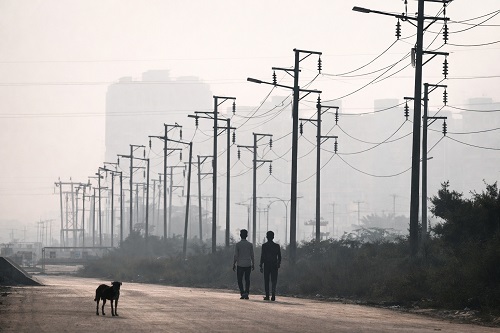
Widespread complaints over unusually high electricity bills have surfaced across Tamil Nadu in recent weeks, with many domestic consumers claiming that their latest bills are two to three times higher than previous billing cycles.
The issue has triggered public concern and fresh political debate, prompting the Tamil Nadu Electricity Board (Tangedco) to issue an explanation and order a review of the billing process.
The controversy comes just months after the TVK government assumed office under Chief Minister C. Joseph Vijay. One of the government’s earliest and most publicised decisions was the rollout of its flagship election promise of providing 200 units of free electricity to eligible domestic consumers.
The Chief Minister signed the order shortly after taking office, making it one of the first major welfare measures of the new administration. Under the scheme, households consuming up to 500 units of electricity during a billing cycle are entitled to receive the first 200 units free of cost.
While the initiative was welcomed by many consumers, criticism soon emerged over the government’s decision to retain the existing bi‑monthly billing system rather than introduce monthly billing, another promise highlighted during the election campaign.
Several consumer groups argued that the two‑month billing pattern made it difficult for households to accurately monitor their electricity consumption and the benefits of the free power scheme.
As complaints over inflated bills mounted, opposition parties alleged that the government had quietly increased electricity charges after announcing the free electricity scheme. Consumers from different parts of the state also claimed that their bills had risen sharply despite there being little or no increase in power consumption.
Responding to the growing concerns, the Chief Engineer of Tangedco’s Padi Zone issued a circular acknowledging that irregularities in the billing system had affected consumers in certain areas.
According to the circular, consumers had suffered financial hardship due to abnormal billing practices in certain sections of the electricity department. It stated that shortcomings in meter reading and the billing process had resulted in incorrect and excessively high electricity charges being recorded in certain cases.
The circular directed supervising engineers to conduct periodic inspections of the billing process and ensure that any anomalies are identified without delay. Divisional offices have also been instructed to immediately detect and rectify problems arising from faulty meter readings so that consumers are not burdened with incorrect electricity bills.
The utility is expected to review affected cases and take corrective action wherever billing errors are confirmed.